
Sea bass is popular because it has a naturally delicate flavour, a firm but tender texture, and the unique ability to stay light while still feeling luxurious. It suits almost every cooking method, pairs well with a wide range of flavours, and is easy to enjoy for people who prefer clean, balanced food. Its rise in London dining is also tied to sustainability efforts and a growing preference for lighter, fresher meals.
But the story of sea bass goes much deeper, from ancient history to modern restaurants like Beef & Bass.
At Beef & Bass, sea bass isn’t just another dish on the menu; it represents the entire philosophy behind the restaurant. We have always believed in cooking food that feels honest, simple, and full of flavour, and wild sea bass fits that perfectly. It’s a fish that doesn’t need dressing up; it just needs good sourcing and real fire. When we grill it over charcoal, it becomes everything we stand for: clean, balanced, and effortless. It is the kind of dish people eat and instantly understand what Beef & Bass is about.




History of Sea Bass
Sea bass has been loved for thousands of years. Here’s the condensed version of its journey:
1. Ancient Mediterranean favourite around 500–300 BC
Civilisations around Greece, Sicily, and the South of France prized sea bass for its clean taste and how easily it grilled over open fire. Even in early Greek texts, sea bass was described as a “balanced fish”, flavourful but never overpowering.
2. A fish connected to celebrations 1st–10th century AD
Across coastal towns in Italy, Spain, and Morocco, sea bass became the go-to fish for weddings, reunions, and feast days. It symbolised abundance, family, and simple, shared meals. Many households would save the best fish for holidays or when guests came over.
3. The rise of the “modern healthy fish” 1980s to early 2000s
As global dining shifted towards lighter, wellness-focused food, sea bass quietly became a top choice because it’s:
○ low in fat
○ high in protein
○ gentle on digestion
○ easy to prepare in different styles
By the 1990s, London restaurants started featuring it more frequently, especially as diners began choosing cleaner, simpler dishes.
4. Charcoal and sea bass: an old tradition carried through centuries
Long before restaurants made it fashionable, families along the Mediterranean grilled sea bass over wood or charcoal on beaches, in gardens, and during Sunday gatherings. The method hasn’t changed much since then. The simplicity of fire and fresh fish is exactly what gives sea bass its clean, unmistakable flavour today.
Some facts about Sea Bass
1. Sea bass can change colour depending on where it swims
Wild sea bass naturally adjust their shade to blend with their surroundings, darker around rocks, lighter in open water. It’s one of the reasons they are hard to spot in the wild.
2. They are surprisingly fast hunters
Sea bass can go from still to a sudden burst of speed in a split second. This is why wild-caught sea bass has a firmer texture. The fish is active, not sedentary.
3. The cleaner taste comes from oxygen-rich waters
Sea bass that live in naturally moving, colder water taste cleaner because the constant flow removes impurities and keeps the fish lean. This is why wild sea bass tastes noticeably fresher than farmed.
4. They are one of the few fish that stay tender even if slightly overcooked
Unlike salmon or cod, sea bass doesn’t dry out as quickly. That’s why chefs call it a “forgiving fish,” great for people who don’t normally cook fish at home.
5. Sea bass bones conduct heat beautifully
When cooked whole or on the bone, the heat travels smoothly through the fish, giving a more even cook and a softer texture. This is why charcoal-grilled whole sea bass tastes especially good.
6. It is considered a ‘neutral’ fish in many cultures
Across Mediterranean and Middle Eastern cuisines, sea bass is often given to children or people recovering from illness because it’s gentle on digestion and naturally low in fat.
7. Sea bass flavour changes slightly by season
In warmer months, it tastes lighter and sweeter. In colder months, the flavour becomes a little richer because the fish stores more energy.
8. The best sea bass are not the biggest ones
Chefs prefer medium-sized wild sea bass because they have the perfect balance of firmness and flavour. Very large bass can taste tougher.
Health benefits of sea bass
1. Light, lean protein
Sea bass is naturally low in fat while still providing high-quality protein. It’s filling without being heavy, which makes it ideal for people who want satisfying meals that are easy on the stomach.
2. Great for digestion
Because it’s lean and not oily, sea bass is gentle on digestion. Many people who struggle with heavier fish or rich meats find sea bass much easier to enjoy.
3. Rich in omega-3s
Sea bass contains a good amount of omega-3 fatty acids, but not at the levels that make oily fish feel intense. You get the benefits of omega-3s with a cleaner, milder taste.
4. Naturally low in saturated fat
Its low saturated-fat profile makes it a good choice for people who prefer lighter, balanced meals that don’t leave them feeling weighed down.
5. Packed with essential minerals
Sea bass contains important nutrients like:
○ selenium
○ phosphorus
○ magnesium
○ potassium
These support energy, muscle function, and general well-being.
6. Supports balanced eating
Because sea bass is light and versatile, it fits easily into many types of diets: dairy-free, gluten-free, low-carb, or simply “eat clean, feel good.”
7. Works well with simple cooking
Sea bass does not need heavy sauces or creams to taste good. A little charcoal, lemon, or herbs is enough, which naturally keeps the meal lighter and more nutritious.
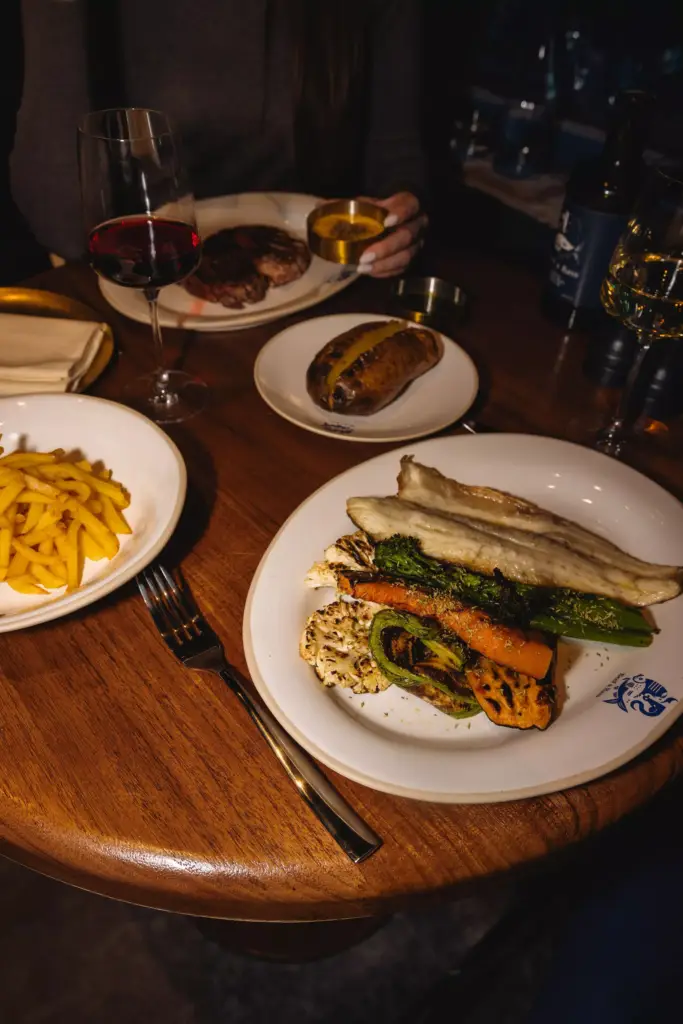
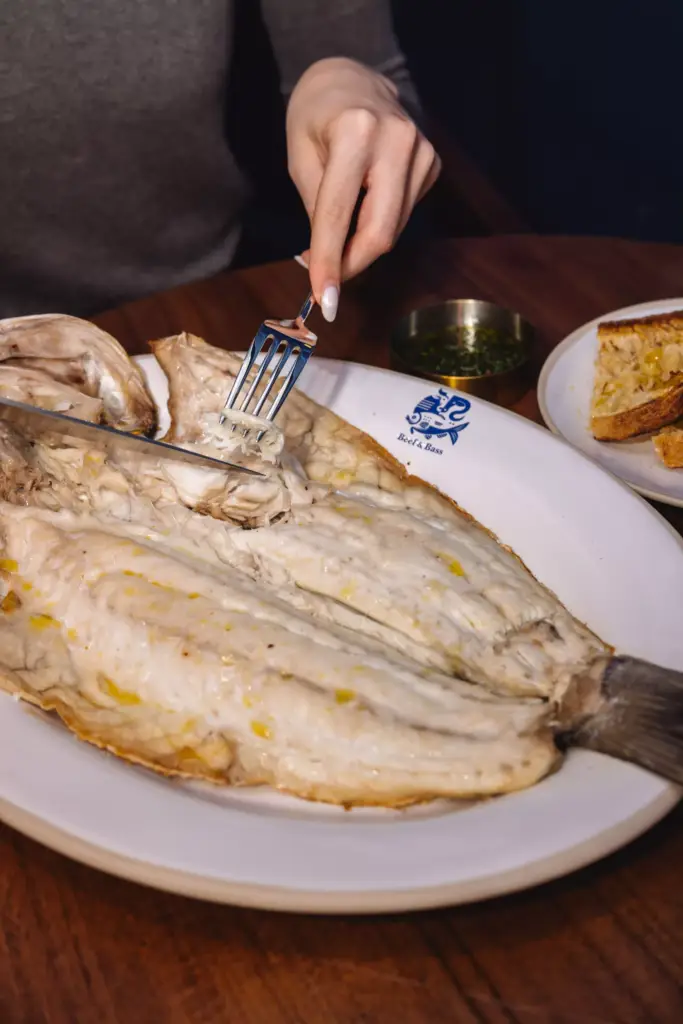


Sea bass at Beef & Bass: what makes ours different
1. Wild-caught and responsibly sourced
Our sea bass is wild, not farmed, and comes from a trusted fishing partner who supplies consistently high-quality catch.
That means:
○ firmer texture
○ cleaner flavour
○ no muddy aftertaste
○ better nutritional value
confirms Beef & Bass uses wild-caught, responsibly sourced seabass.
2. Cooked over real charcoal
We don’t cover the fish in heavy sauces.
Charcoal does the work:○ crisp skin
○ soft flakes
○ light smoke
○ refined taste
3. Prepared the traditional way
Our chefs prepare sea bass the way coastal families have done for generations minimal interference, maximum respect for the fish.
Wild vs. Farmed Sea Bass
Flavour
○ Wild: Clean, slightly sweet, naturally more complex.
○ Farmed: Milder taste, sometimes less defined.
Texture
○ Wild: Firmer with tighter flakes because the fish swims actively in open waters.
○ Farmed: Softer, more uniform texture due to limited movement.
Colour
○ Wild: Slight variations depending on the environment.
○ Farmed: Consistent and usually lighter.
Diet
○ Wild: Natural marine diet (small fish, crustaceans).
○ Farmed: Controlled feed, which can influence the flavour profile.
Activity Level
○ Wild: Constant swimming builds firmer meat.
○ Farmed: Limited movement leads to softer flesh.
Cooking Result
○ Wild: Holds its shape beautifully on charcoal; the skin crisps perfectly.
○ Farmed: Can be more delicate when grilling.
Sourcing
○ Wild: Seasonal and reliant on responsible fishing.
○ Farmed: Stable and available year-round.
Environmental Impact
○ Wild: Lower impact when responsibly caught.
○ Farmed: Impact varies widely depending on farming practices.
Best For
○ Wild: Guests who want the cleanest, most premium flavour.
○ Farmed: Everyday cooking and lighter, simpler dishes.
Try our signature sea bass dishes
At Beef & Bass, our sea bass dishes always reflect two things:
clean flavour + respect for the fire.○ Wild Sea Bass Fillet (Charcoal Grilled) from our set menu
○ Wild Sea Bass Tiradito with Amalfi Lemon & Tomato Pulp
○ Wild Sea Bass with Crispy Corn & Coriander
○ Wild Sea Bass Selection (priced per 100g), served with Salsa Verde
Experience the charcoal-sea bass combination in Chelsea
If you love fresh, delicate flavour with a touch of smoke, our wild sea bass dishes are a must-try. They are simple, balanced, and designed to feel good after the meal.